Article · Shares
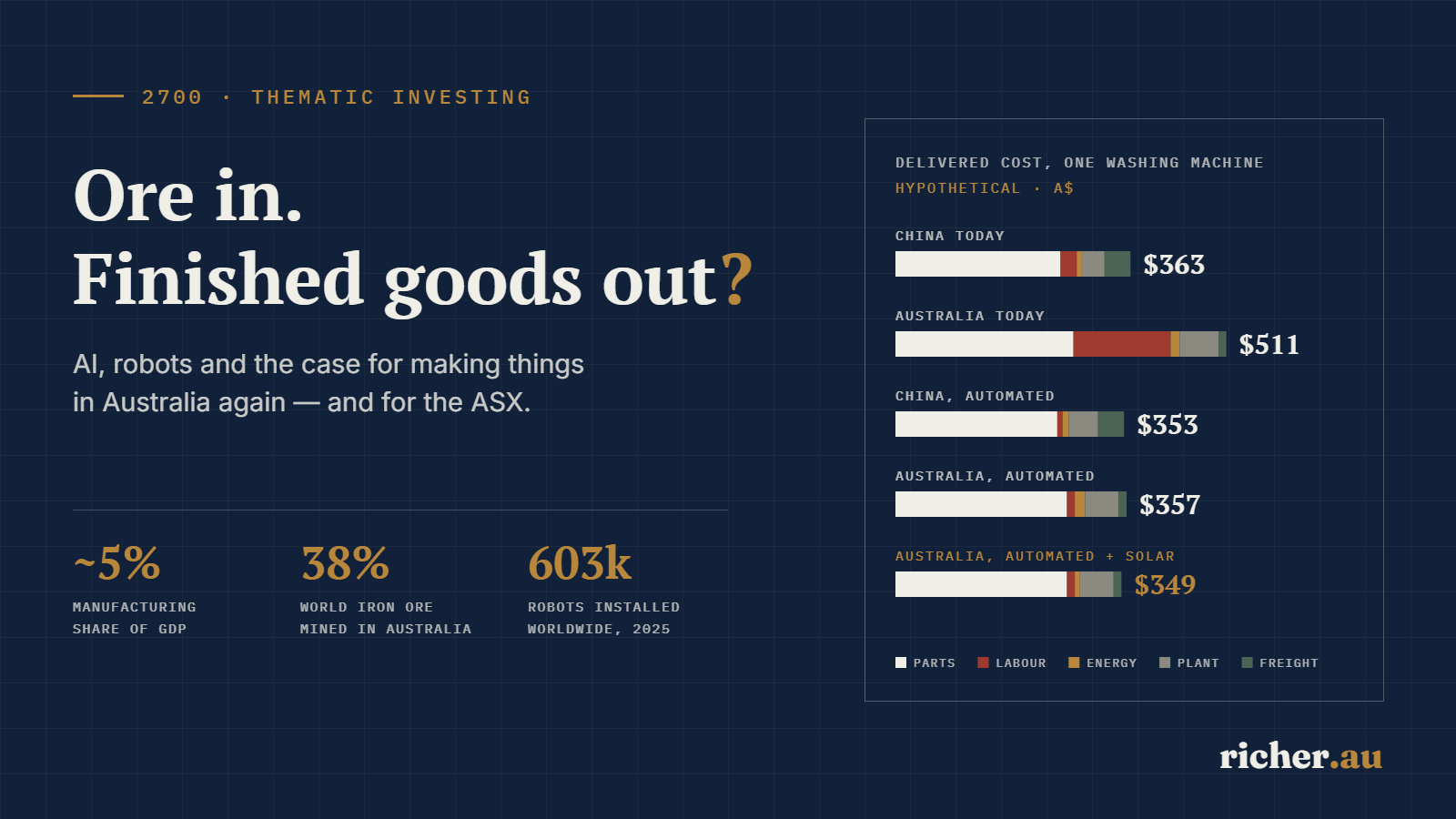
Ore in. Finished goods out?
Robots are shrinking the wage gap that sent Australian ore offshore. What it means for factories, jobs, migration, property and the ASX — tested against China, Vietnam and India.
Read the article →A practical guide to share investing in Australia: ASX shares, ETFs, LICs, dividends, franking credits, brokers and tax. No hot tips or charting theatre — just the structures, costs and rules that shape what you actually keep.
Robots are shrinking the wage gap that sent Australian ore offshore. What it means for factories, jobs, migration, property and the ASX — tested against China, Vietnam and India.
Read the article →Official references: ASX index guide, ATO CGT guide and ASIC MoneySmart ETF guide.
Robots are shrinking the wage gap that sent Australian ore offshore. What it means for factories, jobs, migration, property and the ASX — tested against China, Vietnam and India.
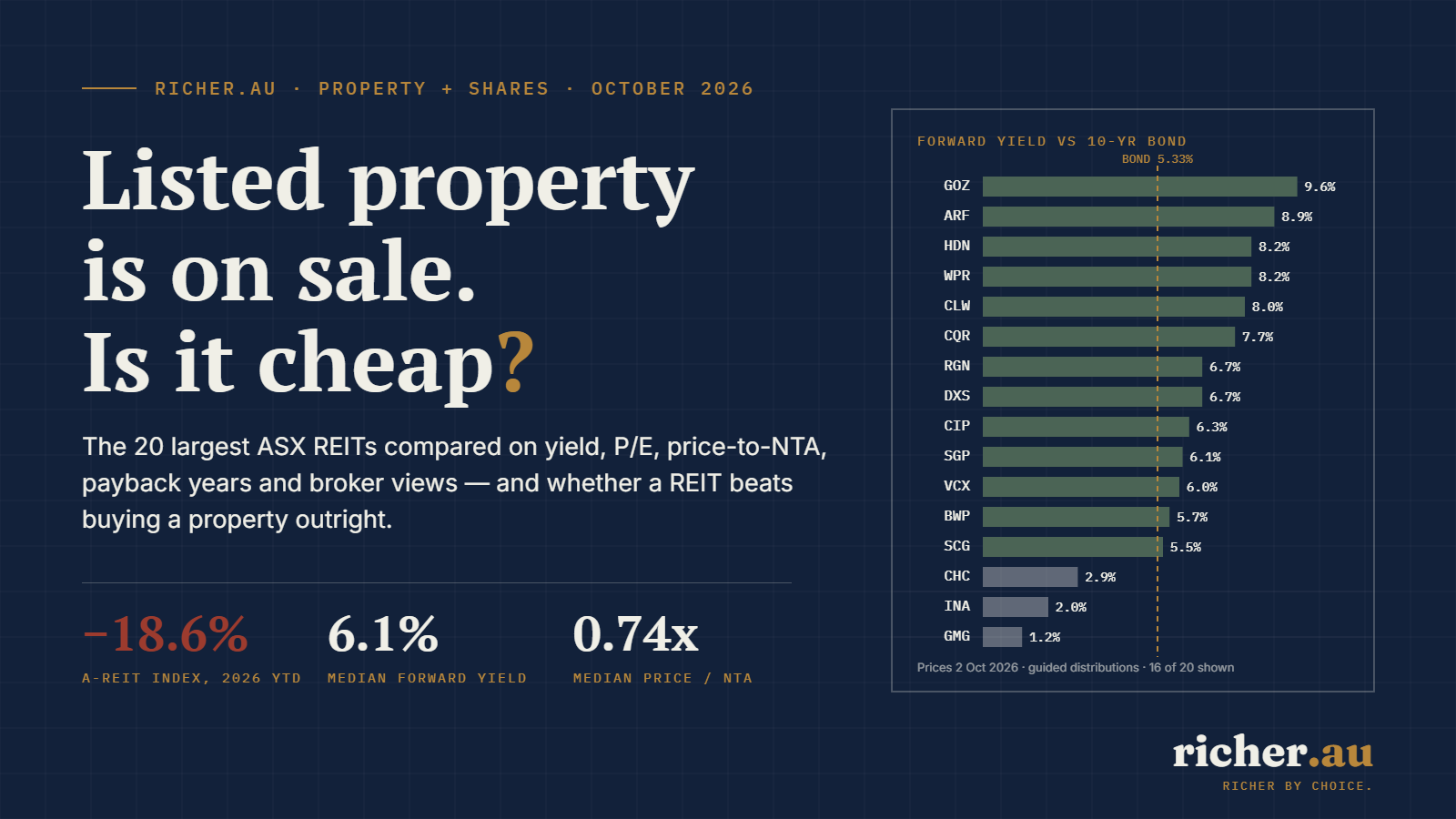
The 20 largest ASX REITs compared on yield, P/E, price-to-NTA, payback years and broker targets — and whether a REIT beats buying a property outright.
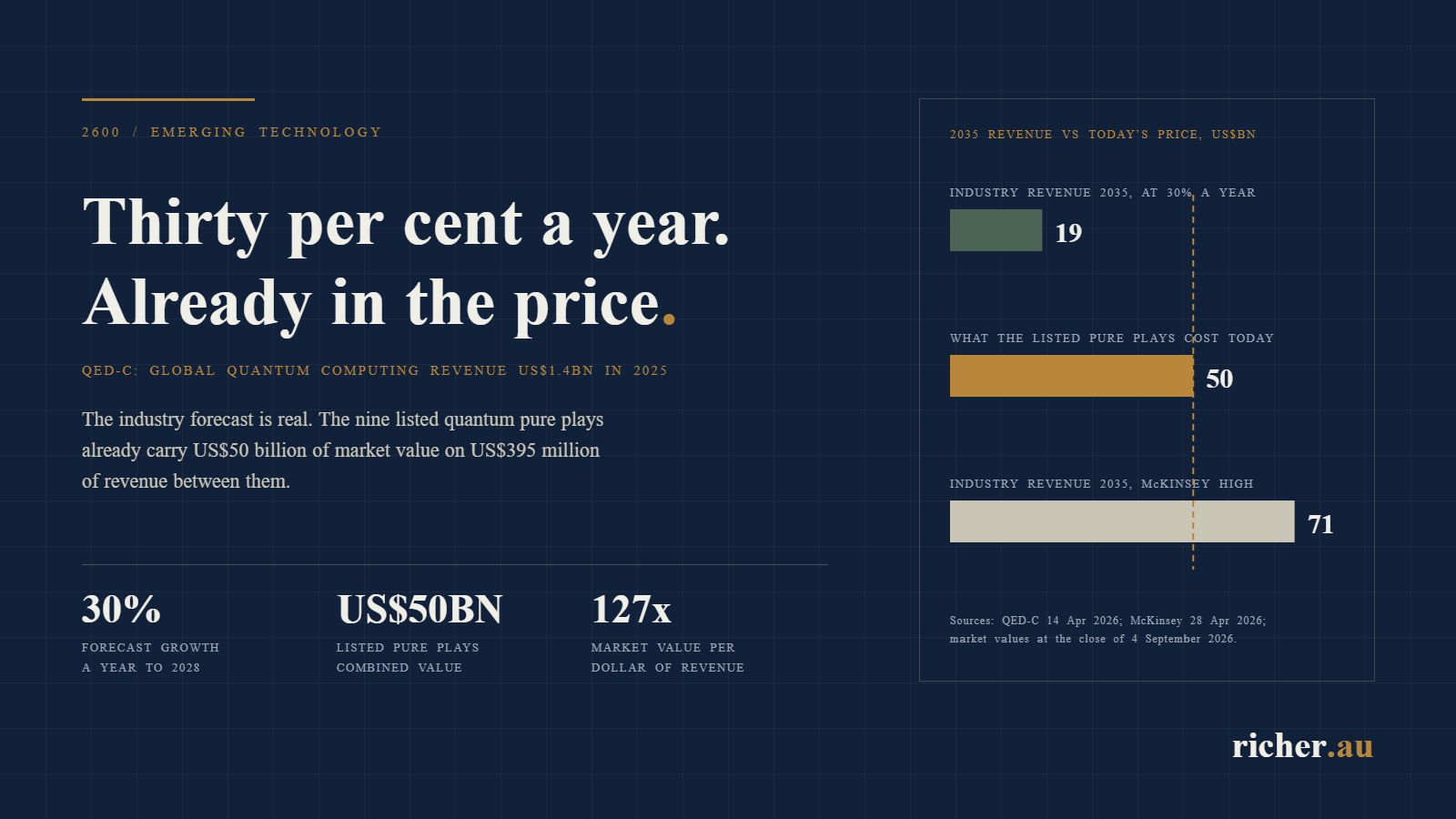
Quantum revenue should grow 30% a year. Why that alone does not make the listed pure plays a good ten-year hold.
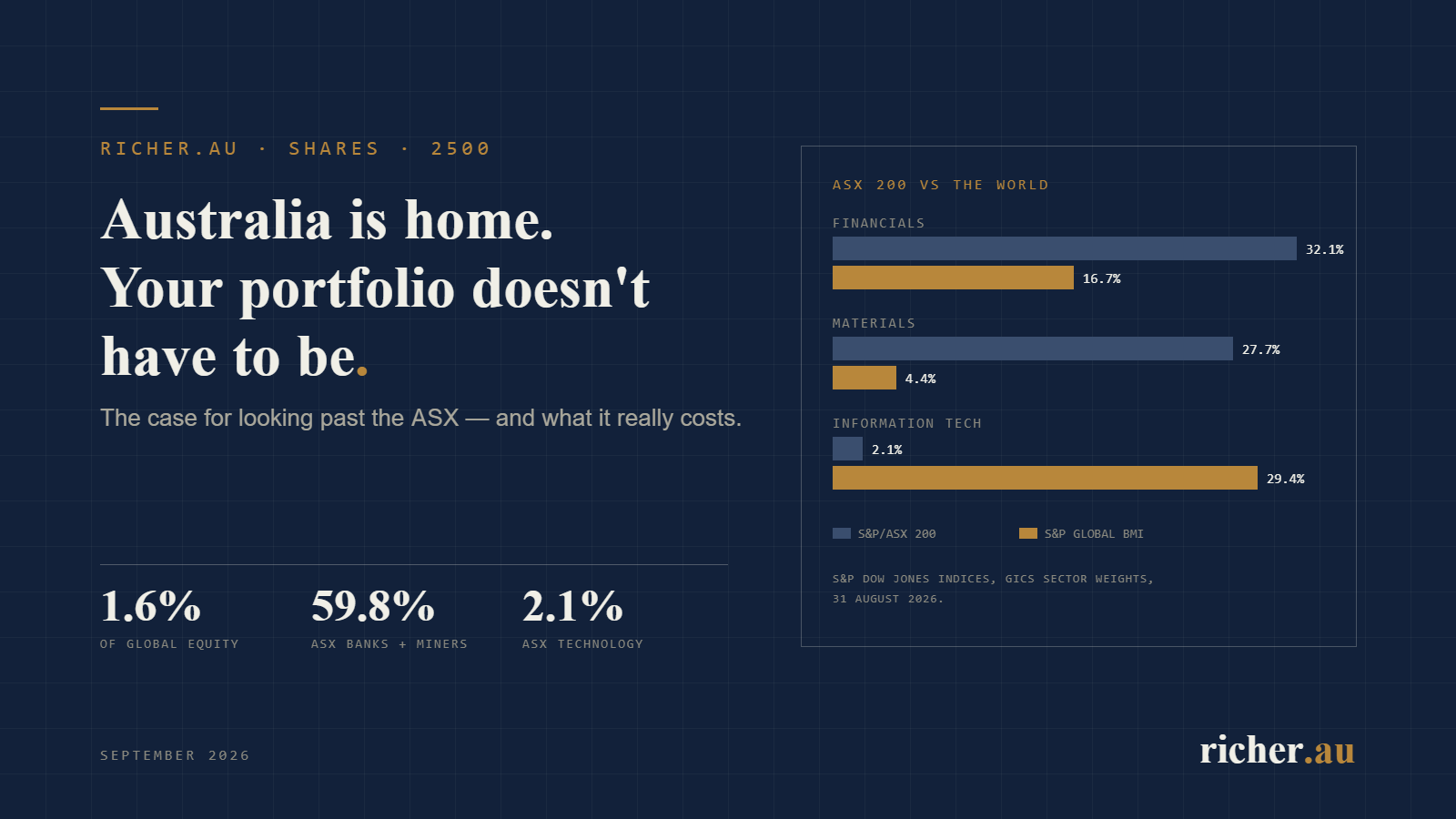
Australia is 1.6% of global listed equity. What that means for an ASX-only portfolio, and what going offshore actually costs.
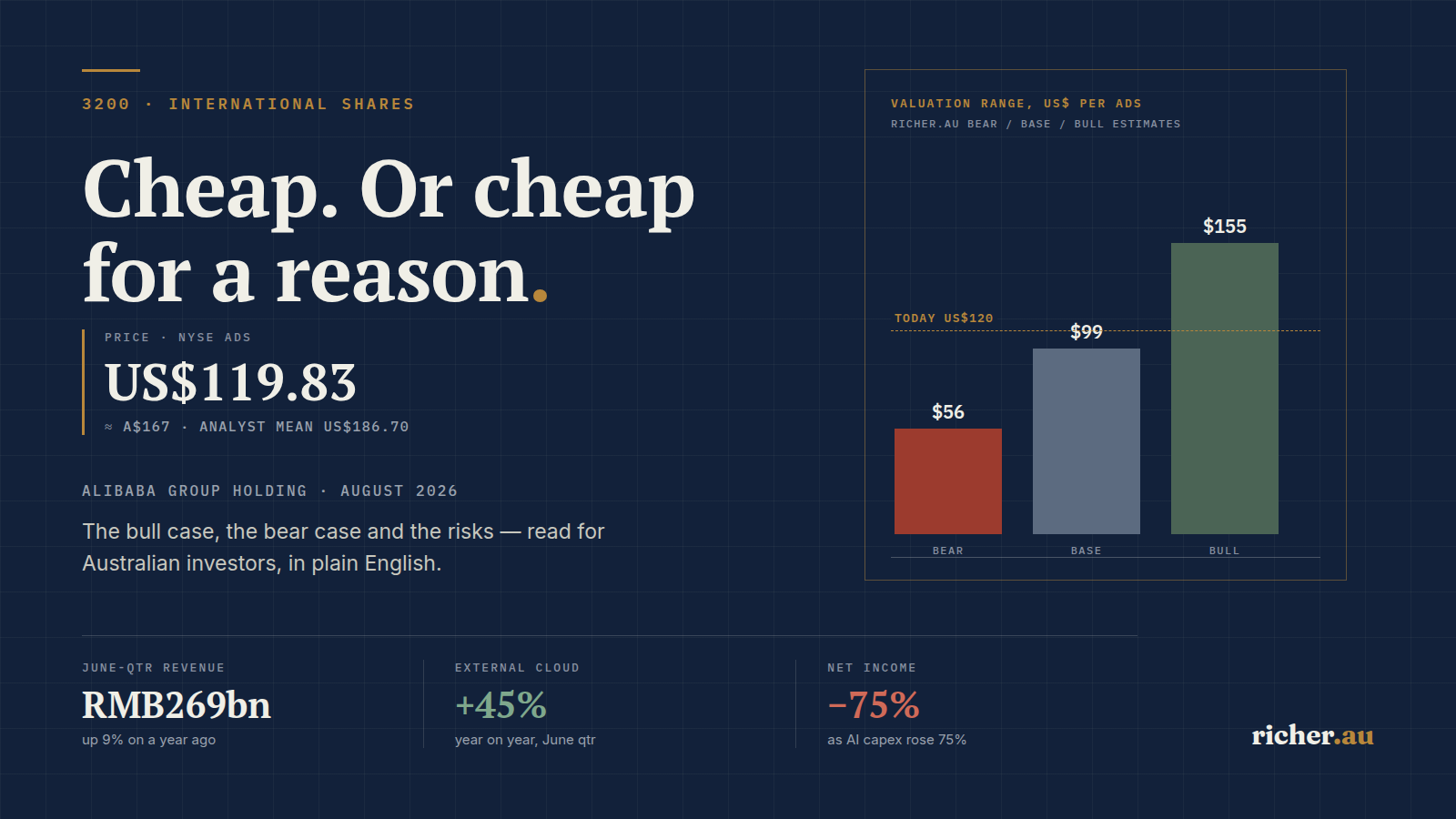
Alibaba trades near US$120 while analysts average about US$187. The bull case, the bear case, the valuation and the risks.
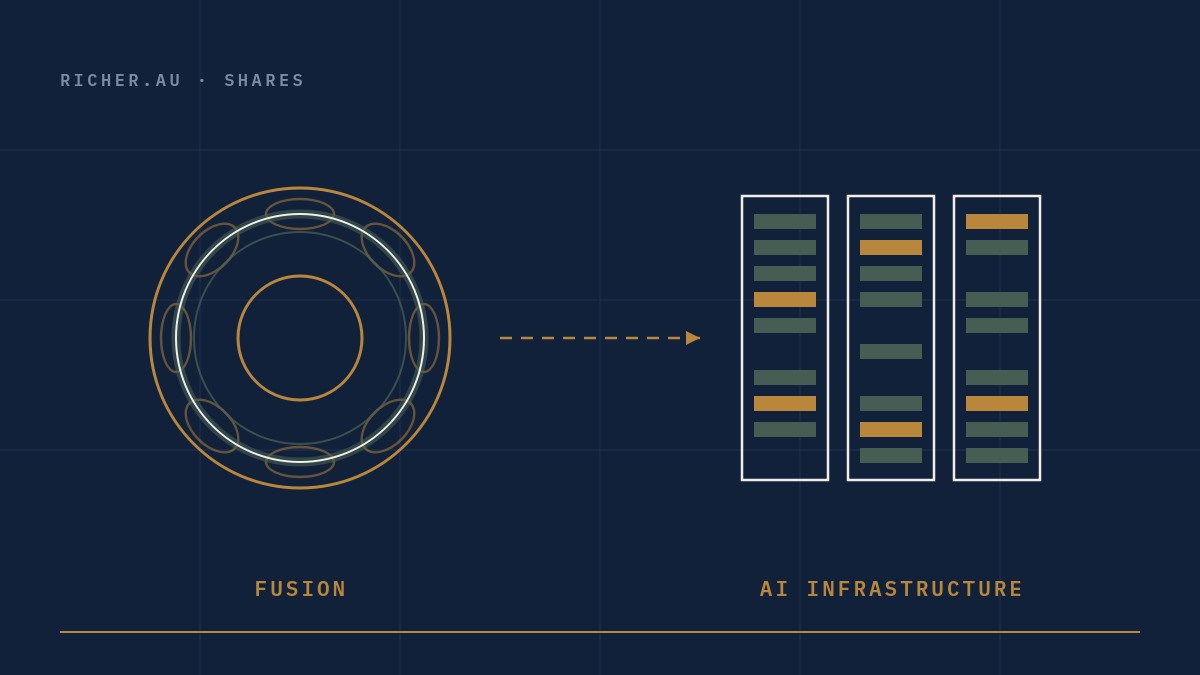
What Australians can actually buy as AI power demand meets the long, speculative road to commercial fusion.
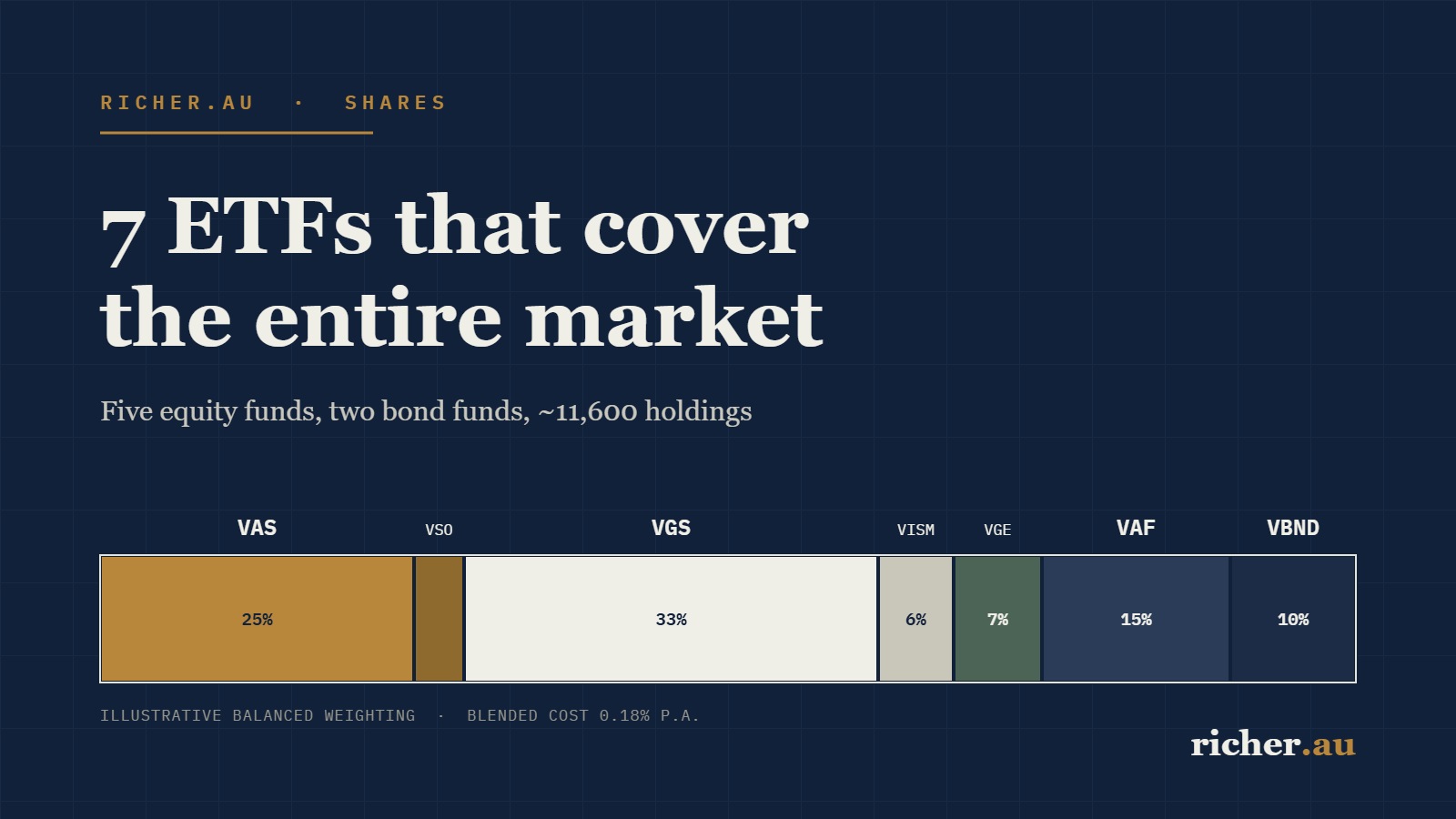
Five equity funds and two bond funds that own nearly the entire investable market — the tickers, the weights and the true cost.
Broker model, whose name the holding sits in, and whether you buy personally, through a trust or inside super. Changing it later is a capital gains event.
A handful of broad index funds gets you the whole market for a fraction of a per cent. Everything past that has to earn its fee.
Franking credits, the CGT discount at twelve months, and how dividends land on your return. The after-tax number is the only one that counts.